 Hover to view full image
TA-007 · available
Phra Nak Prok
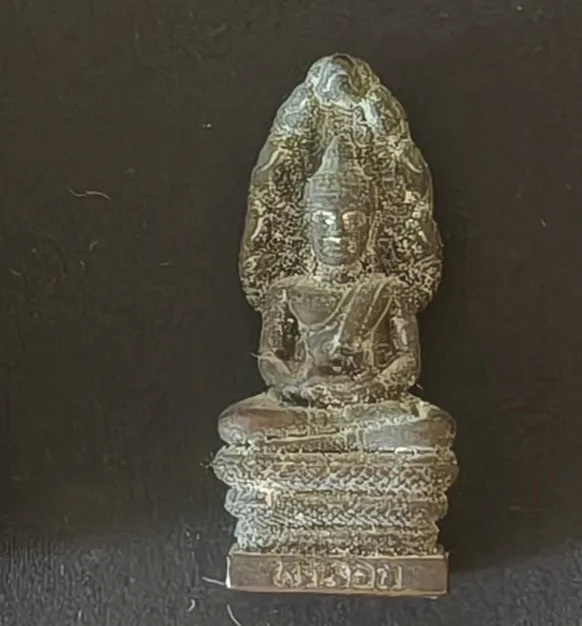
Phra Nak Prok, also known as Phra Nak Prok, is a traditional Buddhist image depicting the Buddha seated in meditation while sheltered beneath the hood of the Naga serpent. The distinctive image is deeply connected with Buddhist art and devotional traditions throughout Thailand and Southeast Asia.
The name "Nak Prok" can be understood as referring to the Naga spreading its hood over and sheltering the Buddha. The image is generally portrayed with the Buddha seated in meditation, with the Naga rising behind him and its hood extending above the Buddha's head.
The imagery is associated with an episode in Buddhist tradition in which Mucalinda, the Naga king, protected the Buddha from severe weather while the Buddha remained absorbed in meditation. The Naga's protective posture has therefore become an important Buddhist artistic symbol representing shelter, protection and reverence for the Buddha.
Phra Nak Prok is not limited to a single temple, monk, or production period. It has been produced in numerous forms by temples and Buddhist craftsmen throughout Thailand. Consequently, the temple, monk, province, year and material should be identified according to the particular Phra Nak Prok specimen being catalogued.
The number and shape of the Naga's heads can vary between artistic traditions and productions. Some Thai representations feature a multi-headed Naga forming a protective canopy over the Buddha, while other examples may use different artistic interpretations. These variations are important when studying the origin and style of a particular piece.
Phra Nak Prok can be found in a variety of materials. Traditional and later examples may be made from bronze, brass, copper, other sacred metal alloys, sacred powder, clay, or other consecrated materials. The exact material composition depends on the temple, edition, production method, and historical period.
In Thai Buddhist devotional culture, Phra Nak Prok is traditionally associated with protection, shelter, stability, meditation and overcoming difficulties. The image's symbolism comes primarily from the protective Naga and the Buddha's unwavering meditation.
Devotees may therefore regard Phra Nak Prok as an auspicious Buddhist image representing protection from adversity and the strength to remain calm and spiritually grounded during difficult circumstances. These associations belong to religious and cultural tradition rather than scientifically established supernatural effects.
From a collector's perspective, Phra Nak Prok is particularly interesting because the form has been produced in many different artistic styles and periods. Identification may involve studying the Buddha's posture, facial characteristics, Naga hood, number and arrangement of Naga heads, base, dimensions, casting or molding characteristics, material, inscriptions, surface, provenance and known temple history.
Collectors should be cautious about assigning a specific temple or monk to a Phra Nak Prok solely from its appearance. Similar designs can occur across different temples and periods, while later reproductions and commemorative issues can closely resemble older examples.
When cataloguing a particular Phra Nak Prok, it is therefore preferable to record the exact temple, monk or master, production year, edition, material, dimensions, provenance and condition whenever reliable information is available.
Phra Nak Prok remains an enduring form of Thai Buddhist sacred art. Its combination of the meditating Buddha and the protective Naga creates a powerful visual representation of Buddhist serenity, protection and spiritual resilience, making it meaningful both to devotees and to collectors of Thai Buddhist amulets.
IMPORTANT PAYMENT NOTICE
By proceeding with payment, you acknowledge that your payment is final and non-refundable, except where a refund is expressly approved by us or required by applicable law.
Please review your offer, the Item details, rental conditions, applicable fees, and Terms & Conditions carefully before making payment.
By completing payment, you confirm that you have read and accepted our Terms & Conditions.
- Temple
- Various Thai temples
- Monk
- Various monks and masters
- Material
- Sacred metal, bronze, brass, copper, sacred powder, clay, and other consecrated materials depending on the edition